As part of our commitment to creating sustainable gardens that work with nature rather than against it, we do not use plastic weed cloth in our installations - here's why!
For decades, home gardeners and landscapers alike have been sold the idea that woven plastic cloth provides a cheap, long-term, and effective solution to weeds in the garden. Years of scientific research and hands-on experience, however, have shown us that this plastic is not just entirely ineffective, but actually comes with an extensive catalog of harmful impacts to the long-term health of your garden!
Why it doesn't work:
First, let's address the functionality of these cloth systems. For the first year or two, before the plastic fibers start to break apart, weeds and seeds that were already in the soil will be suppressed; that much is true. We have noticed, however, that some more resilient species, especially invasives like Himalayan Blackberry and Bermuda Buttercup, will happily bide their time underground, and in just a couple of years after installation, new shoots will seek out rips and seams in the weed cloth, bursting through to the surface. A few years down the line, as more and more holes appear in the fabric, weeds will begin to take over your garden.
Next, we have to come to terms with the fact that dust, sand, soil, and weed seeds will inevitably find their way onto the surface of a weed cloth installation. Thanks to birds and wind, new plants will start to germinate, and often, the roots growing from these seeds are tiny enough that they can work their way in between the plastic fibers. So now, not only do you have weeds growing in the garden, but their roots are woven and tangled into the fabric, making them much, much harder to pull out than if you had never installed weed cloth in the first place!
What we do instead:
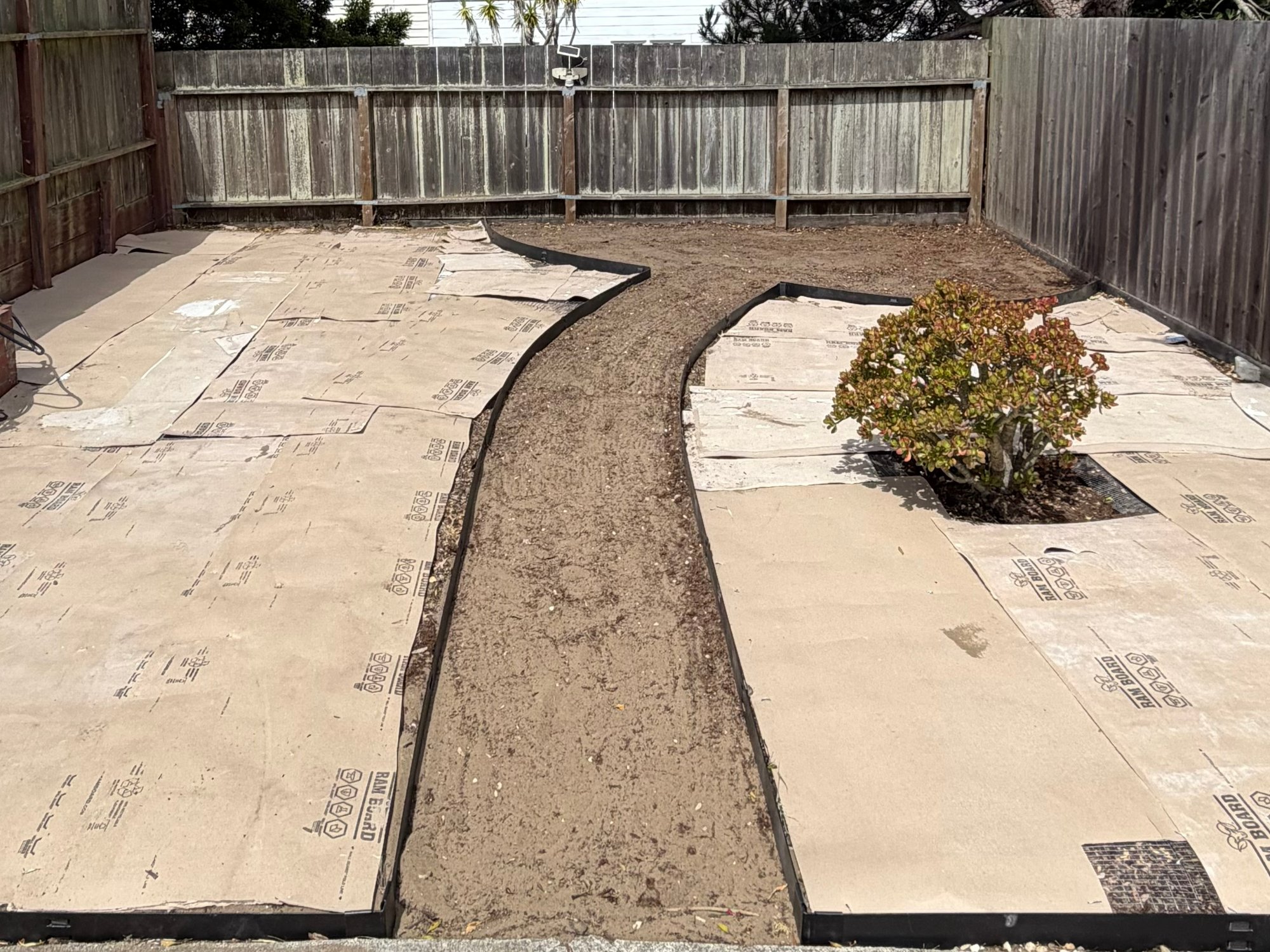
Instead of using freshly manufactured plastic to line our gardens, we find it easier, more effective, and healthier to use a material that we ALL have access to in abundance: CARDBOARD!!!
This technique is called sheet mulching - we place a few layers of recycled paper products, whether it be shipping boxes or construction paper, and top it off with your choice of organic mulch (wood chips, shredded bark, etc.). In a Mediterranean climate, as we have in the Bay Area, these sheets will persist in the soil for a couple of growing seasons, acting as a weed barrier just as effectively as plastic cloth. When coupled with a thick layer of mulch, the weeds that do germinate will remain incredibly easy to manage, growing their roots in a loose mix of mulch and soil rather than weaving them into plastic fibers.
One additional benefit of this sheet mulch system is that when the cardboard does break down, it actually feeds your garden. Earthworms turn the paper into fertile, carbon-rich soil that helps all parts of your garden grow.
Other reasons not to use plastic:
One could write pages and pages arguing against putting more plastic in our gardens, but we will try to keep this list brief:
1. Microplastics
While mulch and cardboard can decompose and be converted into nutrients that feed our gardens, weed cloth can only ever break down into smaller and smaller pieces of microplastic. Over time, these microplastics spread throughout the garden: they become a permanent part of the soil, being absorbed by plants, ending up in our fruits and veggies.
2. Soil airflow and water infiltration
In maintaining a garden, it is absolutely crucial to remember that our soil is ALIVE!!! Plants do not grow in a vacuum: every plant species you can imagine is reliant on a complex web of interactions between bacteria, protists, animals, and fungi that are continuously altering and exchanging nutrients. According to the USDA, there are billions of living creatures in just a single teaspoon of healthy soil! Like most living things on Earth, these soil microbes are dependent on a steady flow of air and water. When we cover our gardens with plastic weed cloth, plants and microbes become unable to exchange oxygen and carbon dioxide with the atmosphere, suffocating much of that underground life. Even though weed cloth manufacturers often claim their products are permeable to water, this is simply not the case - some sections of the soil will remain dry for too long, causing compaction, and eventually, the death of plants and microbes alike.
3. Native pollinators and other insects
Again, we would like to emphasize the fact that plants do not grow in a vacuum - all insects, and pollinators in particular, perform essential roles in maintaining the health of our gardens and nearby ecosystems. Though we often see these species flying and buzzing about, almost all of them interact directly with the soil. In California, a whopping 70% (!!!!) of our native bee species build their nests underground. If we cover our soils in plastic, these bees will be unable to reproduce, and gradually, they, along with the native plants they help to pollinate, will cease to exist.